Understanding how your work is helping build the EPR
A major new phase of work on our Electronic Patient Record is underway across our three acute hospitals.
It will ensure that our EPR supports the way we deliver care to our patients by helping those building the system understand how everyone works.
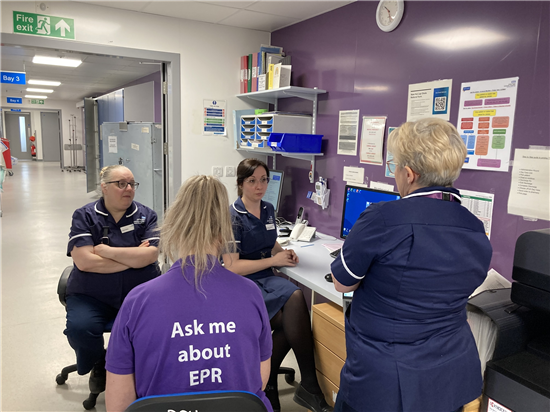
The EPR programme team is meeting colleagues from all areas at our acute hospitals and asking to be shown, step by step, how they move patients through the hospitals. The team is watching and noting every click into a computer system, every form completed, every patient referral or request made.
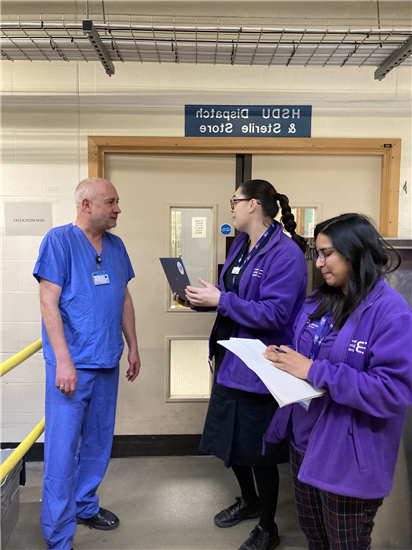
This “walking the floors” work is part of a huge information‑gathering and checking exercise, building on similar work completed two years ago. That earlier work was used as a blueprint for the initial stages of the design and build of our electronic patient record.
Now it is being double checked to ensure every single process needed for patients will be built into the EPR system.
The work sees our hospitals like a network of roads, with each patient journey a route someone might take. For example, one person might travel from A&E to X-ray and then home with an outpatient appointment, while another might go from surgery to a hospital ward.
These journeys are grouped into 14 main “routes,” called Integrated Care Pathways and each covers a complete patient journey, such as adults in A&E, children in A&E, same-day emergency care, surgery, outpatient visits, and services like pharmacy or test requests.
With titles including ED adults, ED paediatrics, SDEC, theatres, outpatients, order comms and pharmacy, those 14 different pathways map a patient’s journey from start to finish showing all the stops along the way and which role and service is involved.
But just as with other journeys, there isn’t only one way to follow each route. Each of these 14 main routes actually has about 30 slightly different versions, depending on the exact paths at each hospital. 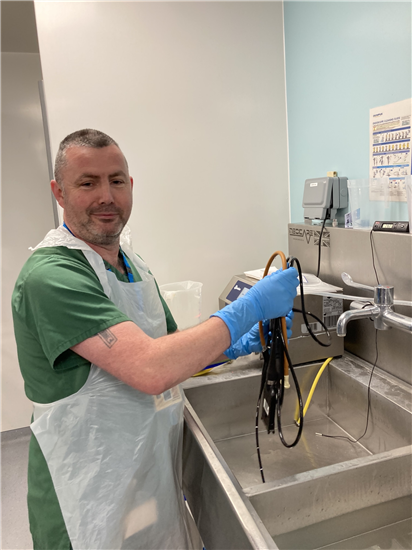
Now the task is to review these routes in detail at each acute hospital and confirm how every version of the journey works - who is involved at each step, what order things happen in and whether digital systems or paper are used along the way.
The next step is to compare the patient journeys to note common steps and any differences between each acute hospital.
For example, is the process for sending an adult patient for an x-ray, then referring to a specialist clinic or a therapy the same at the QEH as at the JPUH? What are the differences and similarities?
The EPR will be one system for all our acute hospitals, so the information is compared and a single efficient and safe standardised process agreed. This single “future state” path for each care process will be built into the EPR and become the way all three acute hospitals will work when the EPR is here.
The whole purpose is to deliver an electronic patient record that improves the quality of care we provide and supports safe, smooth, efficient care for our patients.